
Treat campaigns like prototypes
A campaign is a prototype of positioning. It tests whether a specific audience understands a promise, cares about a pain, trusts the proof, and takes the next step. AI can accelerate the creation of landing pages, product visuals, copy variants, short videos, social posts, and outreach sequences, but those assets need a test design behind them.
Before producing anything, define the hypothesis: who is the audience, what is the promise, what evidence supports it, what action should they take, and what result would change the roadmap. Without that, AI simply produces more noise faster.
Ephemeral does not mean disposable engineering
Temporary campaign sites still need discipline. They should be source-controlled, deployable, accessible, performant, measurable, and easy to remove. A one-week campaign can still damage brand trust if it is slow, broken on mobile, unclear about data capture, or disconnected from the sales process.
The right pattern is a reusable launch kit: page templates, analytics events, form handling, social preview metadata, localization hooks, UTM conventions, content blocks, and a simple deployment path. AI then works inside a system instead of inventing a new mess every time.
Connect social signals to product decisions
Social campaigns are useful only if their signals are interpreted. Views alone rarely matter. Saves, replies, qualified clicks, signups, preorders, demo requests, and direct objections are much more useful. AI can help summarize the feedback, cluster objections, and draft follow-up variants, but product leadership still needs to decide what the signal means.
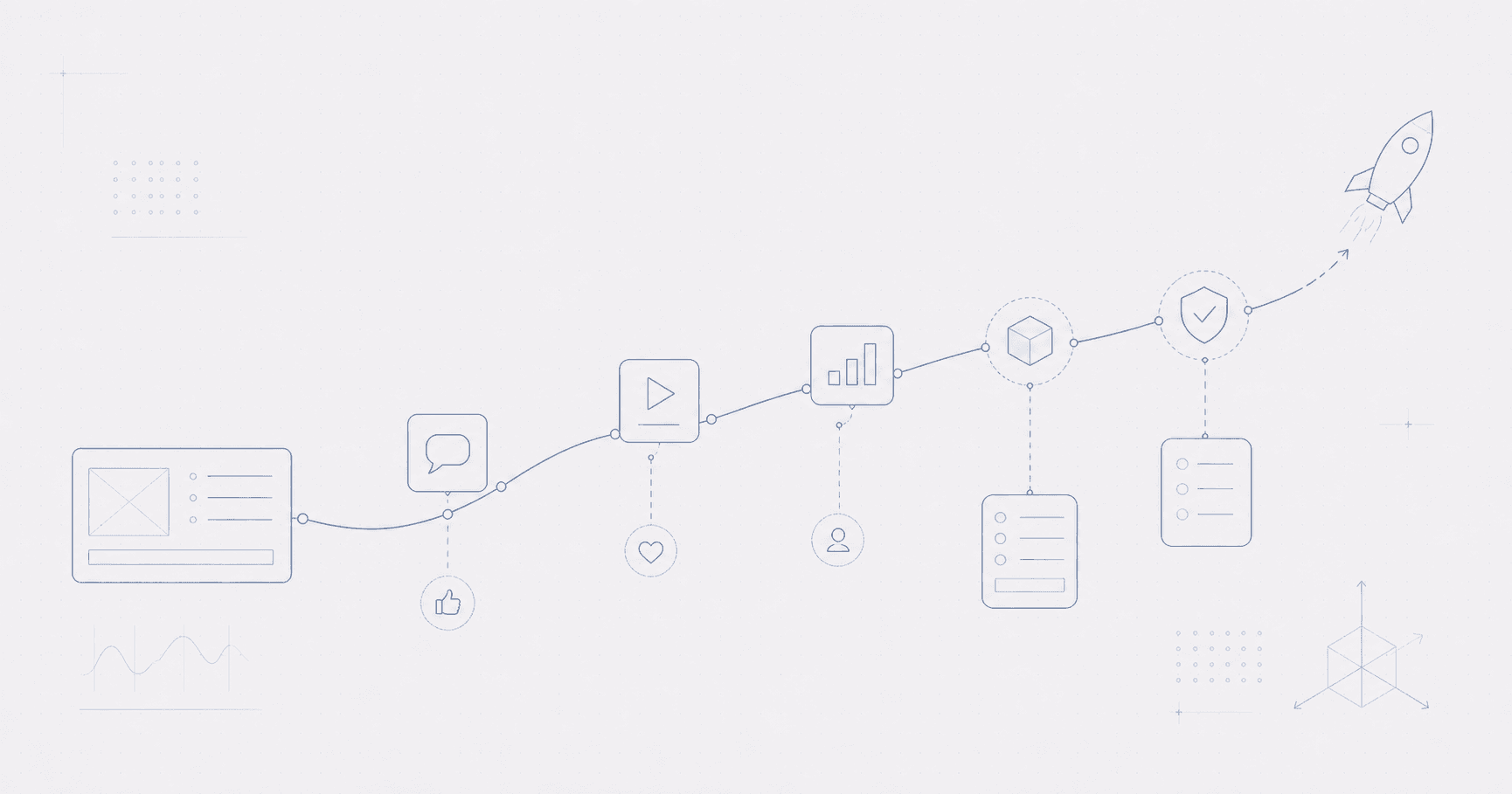
The fastest teams close the loop quickly: campaign result, product implication, prototype update, next campaign. This is where an AI engineering studio can help because the work crosses design, software, analytics, content, and product strategy.
Scale only what survives contact
The purpose of speed is selection. Most campaign ideas should not become long-term assets. A few should become product pages, onboarding flows, sales material, or roadmap changes. The system should make that selection obvious.
When the loop is built well, AI does not replace go-to-market judgment. It gives the team more high-quality shots on goal, faster evidence, and cleaner handoff from marketing experiment to product execution.