The sketch is a hypothesis
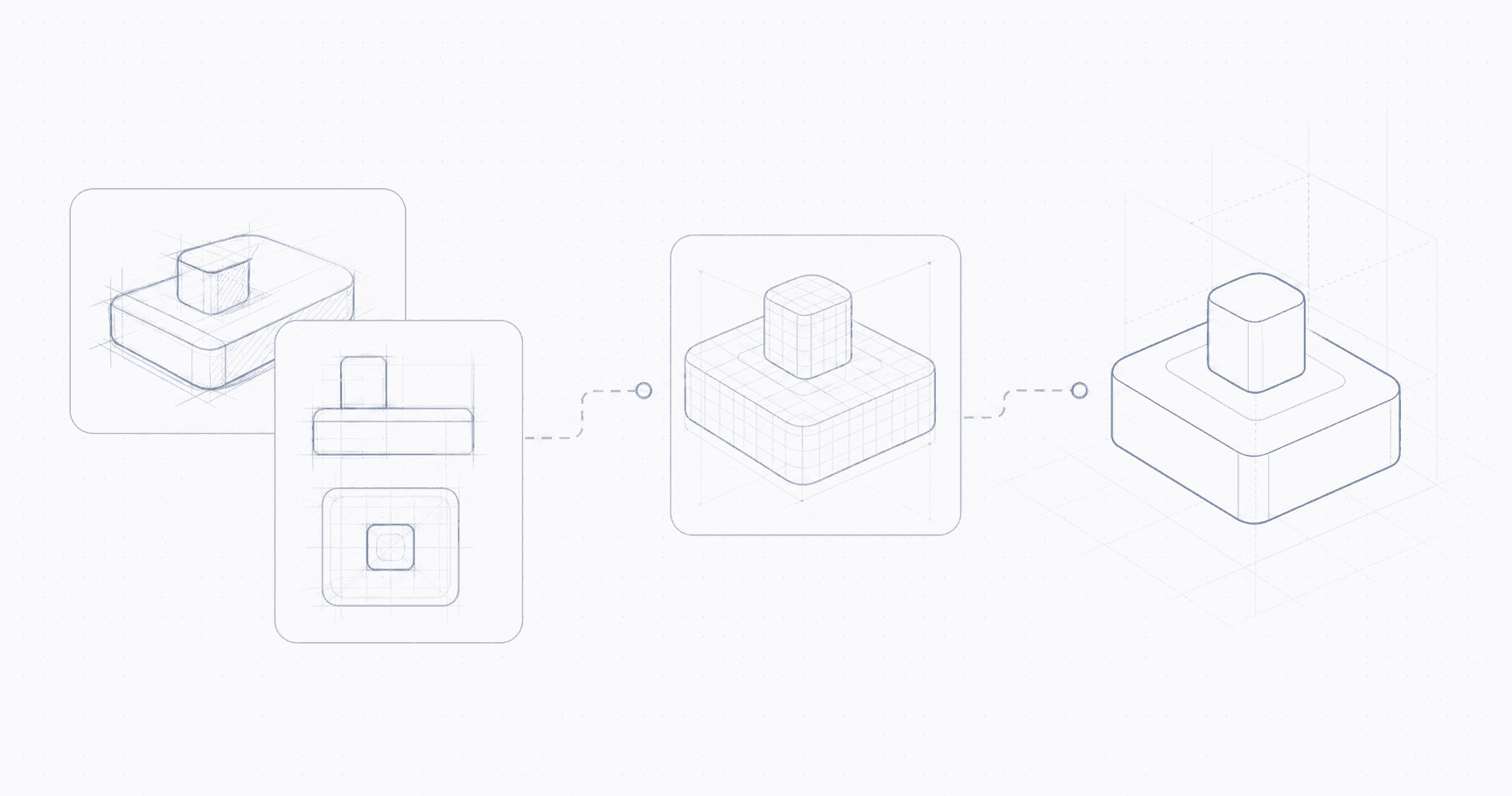
A sketch is usually treated as a visual artifact, but in a serious product workflow it is a hypothesis. It says: this form could fit the hand, this interface could reduce friction, this control loop could feel responsive, this material could survive the environment, this feature could be understood without training. AI is valuable when it helps extract those assumptions and turn them into something that can be inspected.
In an Ignitial Lab or Workshop-style workflow, we start by decomposing the idea into intent, constraints, actors, states, signals, and risks. For a software-only product that may become user journeys, data contracts, permissions, and evaluation criteria. For a physical or hardware-adjacent product it may include dimensions, tolerances, material behavior, firmware states, mobile companion screens, and manufacturing constraints.
Move from image to model quickly
The failure mode of many AI design processes is stopping at the image. The team gets an attractive rendering, but no one knows whether it can be built, how it behaves, what it costs, what it connects to, or which decisions are still open. A better workflow moves quickly from visual direction to model: a block diagram, a notebook, a simulation, an API stub, a CAD constraint set, or a clickable interface.
DjiniousLab-like tools are useful because they make this transition explicit. A notebook can explore numbers and assumptions. A canvas can describe a dynamic system. Scopes can show behavior over time. A run can be saved with provenance so a later discussion is not based on memory or screenshots. The AI assistant is useful only because the underlying work surface is structured enough to be read and changed.
Prototype the riskiest loop first
A prototype should answer the question that could kill the project. If the risk is interaction, build the flow. If the risk is physics, simulate the behavior. If the risk is production, validate material, tolerances, and assembly. If the risk is AI quality, build the evaluator before building the feature. AI helps generate options, but engineering decides which uncertainty deserves the next day of work.
That changes planning. Instead of one large MVP with every surface half-finished, we build a thin prototype around the riskiest loop: input, decision, action, feedback, and evidence. The result can be thrown away, but the learning should survive in requirements, tests, measurements, and a cleaner build plan.
What the client receives
The deliverable should not be a folder of generated assets. It should be a decision package: the preferred direction, rejected alternatives, the assumptions behind each choice, a working slice, screenshots or simulations, known limits, and a concrete next-build estimate. That is what lets a founder, industrial team, or internal product owner decide whether to fund the next stage.
This is where AI-assisted development becomes commercially useful. It compresses exploration, but it also makes the engineering conversation sharper: less time spent imagining what might be possible, more time spent looking at evidence and deciding what to build.