From assistant to operating layer
There is a large difference between adding a chat box to an operational system and designing an AI operating layer. A chat box answers questions. An operating layer observes live state, understands procedures, drafts actions, checks constraints, runs tests, and knows when to stop. The second approach is harder, but it is the only one that deserves to touch real operations.
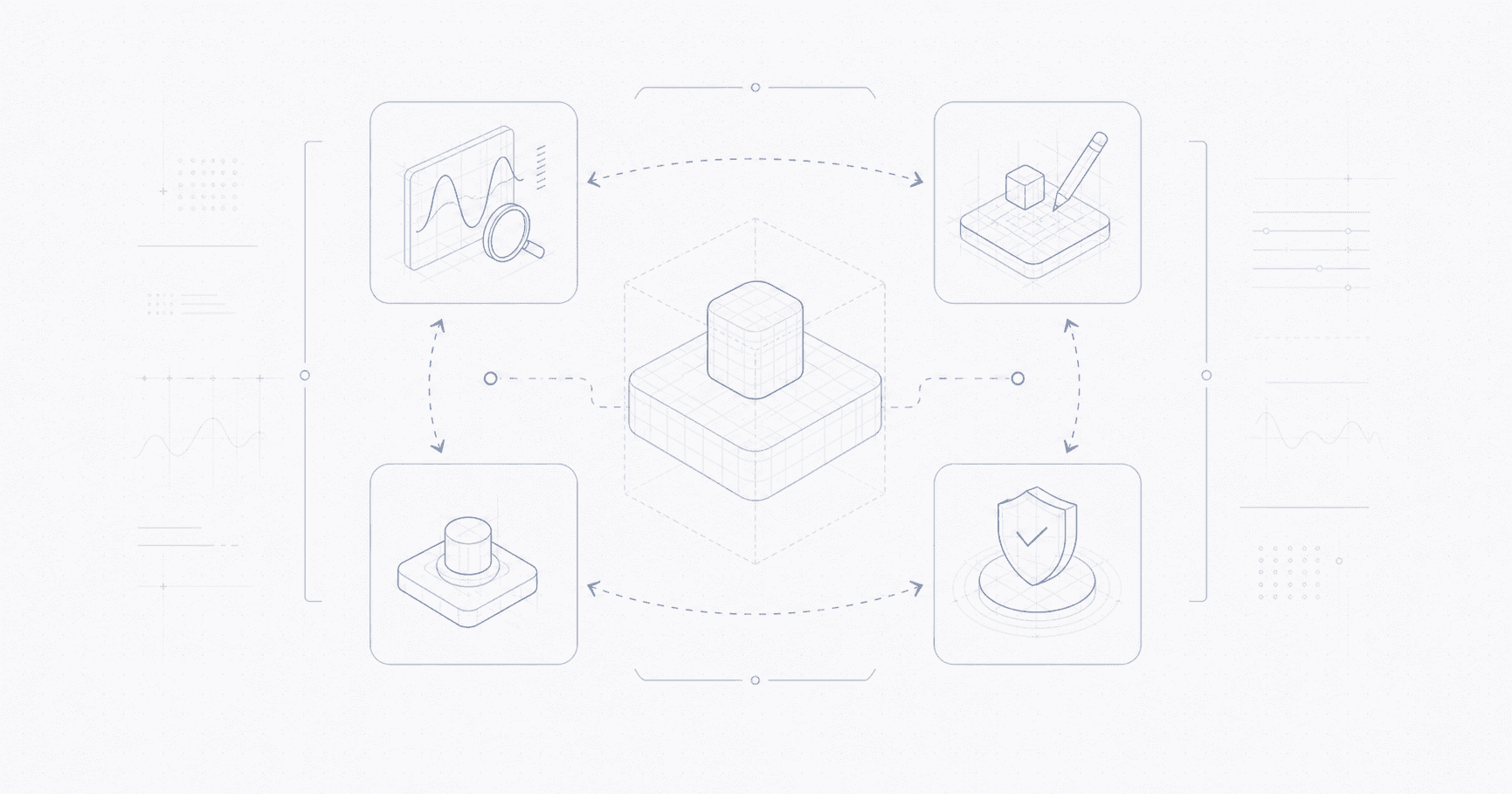
DjiniousCC is interesting because it frames the loop around observe, author, prove, and act. That sequence matters. AI should not jump directly from interpretation to execution. It should first build a precise picture of the plant, platform, or process; then draft a change; then prove the change against a replica, rules, interlocks, read-back, and operator authority.
The digital replica is not decorative
A digital replica or simulation twin is not just a nice visualization. It is the safety boundary that lets the organization ask what would happen if without disturbing production. In industrial systems that may mean SCADA state, historians, alarms, OPC-UA or Modbus sources, procedures, command paths, and physical constraints. In software operations it may mean sandbox data, feature flags, replayed incidents, synthetic customers, and policy checks.
The important pattern is the same: proposed action is tested before live action. That test may be numerical, procedural, security-related, or business-related. The AI can help author the proposal, but the system decides whether the proposal is admissible.
Autonomy needs explicit levels
Teams often talk about autonomy as if it were binary. It is not. A practical system has levels: read-only explanation, draft-only recommendations, human-approved execution, narrow automatic routines, and emergency stop. Each level should be attached to a policy, a role, a scope, a logging requirement, and a rollback path.
This is especially important for self-hosted and industrial deployments because the organization owns the consequences. Good AI operations design makes authority visible: what can be read, what can be changed, what requires approval, what is forbidden, and how the system behaves when confidence is low.
What changes in daily work
The near-term value is not replacing operators. It is reducing the time between signal and understanding. An operator can ask why an alarm sequence occurred, compare the current state with a previous incident, generate a procedure draft, or test a corrective action against the replica. A support team can do the same with customer incidents, service state, logs, and runbooks.
The long-term value is continuity. Decisions, tool calls, proposed actions, approvals, failures, and results become part of the operating memory. The system gets better not because it is magical, but because the workflow finally records the evidence that experienced people already use.